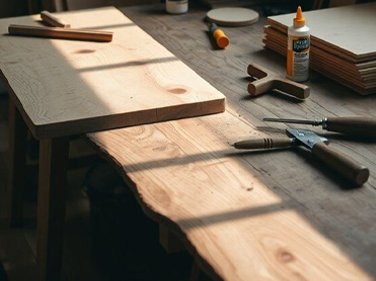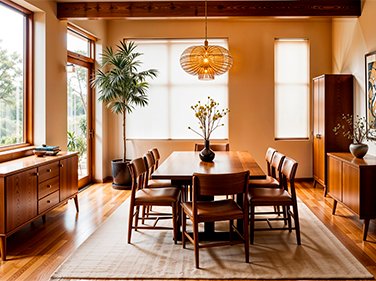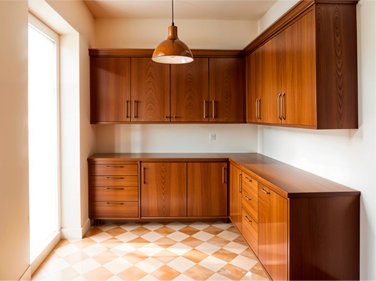
Hardwood plywood is plywood whose face and core veneers come from hardwood species, meaning broadleaf trees, rather than conifers. It is chosen for a fine, even grain and a steady surface, which suits furniture, cabinets and doors. Naimish Plytech Pvt. Ltd. manufactures plywood, block board, waterproof plywood, shuttering plywood and flush doors at Sandila, Hardoi. This page explains what "hardwood" really means on a plywood label and how to compare hardwood plywood manufacturers in UP.
Hardwood is a botanical term for wood from broadleaf trees. It does not promise that every board is hard, heavy or strong. Some hardwood species are quite light, and some are very dense. In India, plywood is often built from species such as eucalyptus, poplar and gurjan, and the choice affects weight, grain and price.
So treat the word as a starting point. The species, the glue and the way the board is pressed tell you far more than the label does.
Get the species and grade in writing. Two boards that look alike can be built very differently.
A sanded hardwood face takes polish, PU coatings, veneer and laminate well. Thin laminates can show grain or ridges if the face is uneven, so a smooth, flat sheet saves finishing time.
We manufacture at A 18, A 19, Industrial Area Phase-2, UPSIDC, Sandila (Hardoi), with a corporate office in Lucknow. Our range covers plywood, block board, waterproof plywood and flush doors. Tell us the application and the finish you plan, and our team will confirm the species, grade and thickness available for it. Use the contact page or call +91 98970 59562, Sunday to Friday, 9 am to 8 pm.
For inspection tips, read our guide to quality plywood manufacturers in UP. If you are weighing a higher-specification board, see our page on premium plywood manufacturers in UP.
Not automatically. Hardwood veneers often give a finer, more even grain that suits furniture and visible work, while the strength of any board also depends on the glue, the pressing and the core construction. Choose by the job and the grade, not by the word hardwood alone.
No. Water resistance comes mainly from the adhesive and the grade, such as MR, BWR or BWP, not from the wood species. A hardwood board made with a dry-area glue will still swell in damp conditions.
It is hard to be sure by eye, because species can look alike once pressed and sanded. Ask the manufacturer for the face and core species in writing and request a sample sheet.
Yes, when it is a BWR or BWP grade board and the cut edges are sealed. Kitchens bring steam and humidity, so the grade matters more than the species.